
5 points
Try
Scored by grounding the ball in the opponent’s in-goal area.
Ferris State Rugby
Fall 2026 recruitment
Men play rugby for the challenge—and stay for the brotherhood.
No experience necessary.
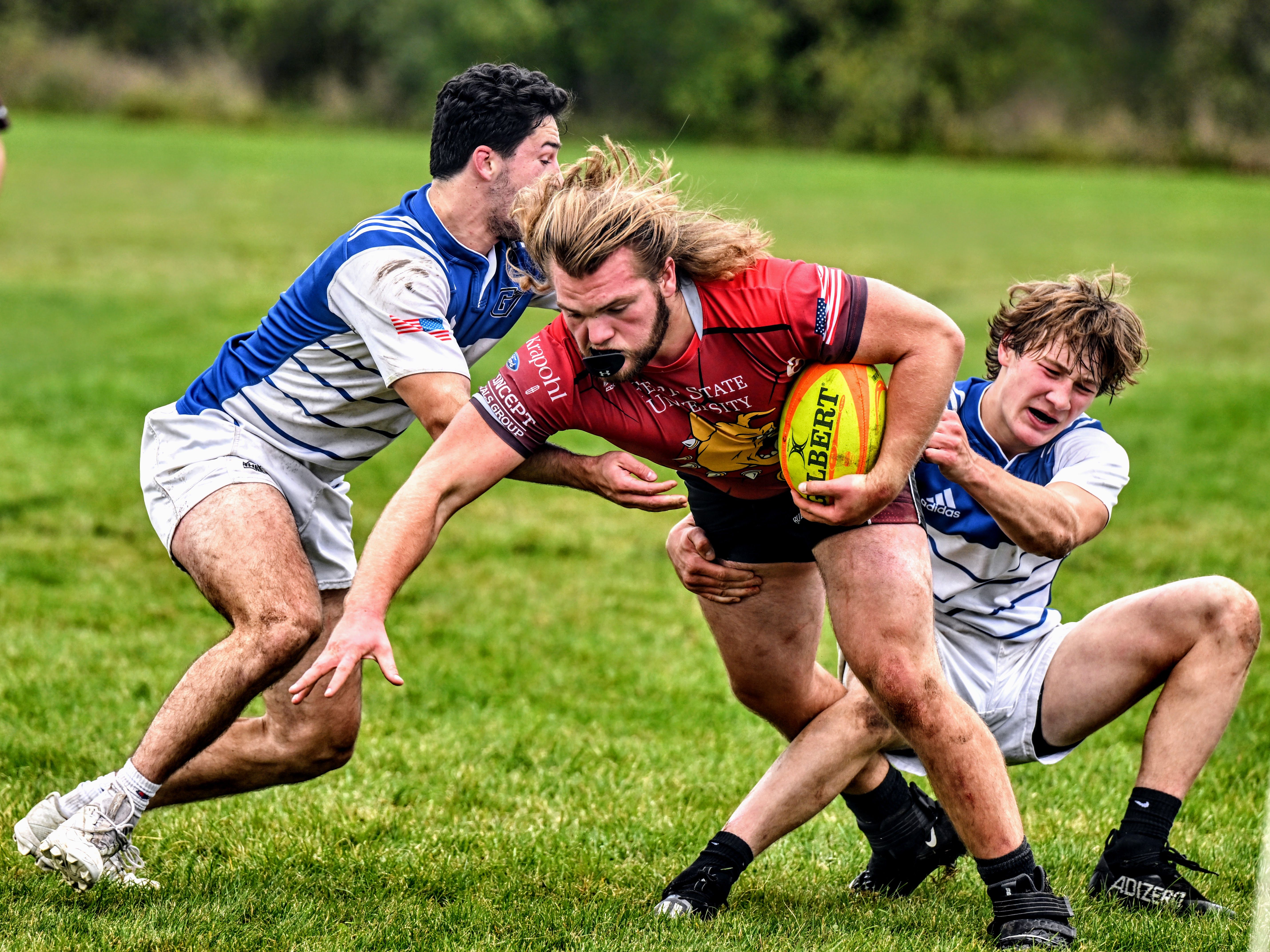
Every role matters.
Why rugby
Men play rugby for the challenge—and stay for the brotherhood.
Rugby demands strength, discipline, courage, and trust. Every player has a role, and every role matters. Whether you have years of experience or have never touched a rugby ball, Ferris State Rugby gives you the opportunity to compete, grow, and become part of something bigger than yourself.
On the field, you will test your limits and develop confidence, resilience, and leadership. Off the field, you will build friendships and memories that last long after graduation.
Rugby is more than a sport. It is a community built on hard work, mutual respect, and the commitment to stand beside your teammates through every challenge.
No experience is necessary. Bring your effort, your attitude, and your willingness to learn. We will teach you the game.
Find your position. Earn your place. Join the brotherhood.
Eight match weekends

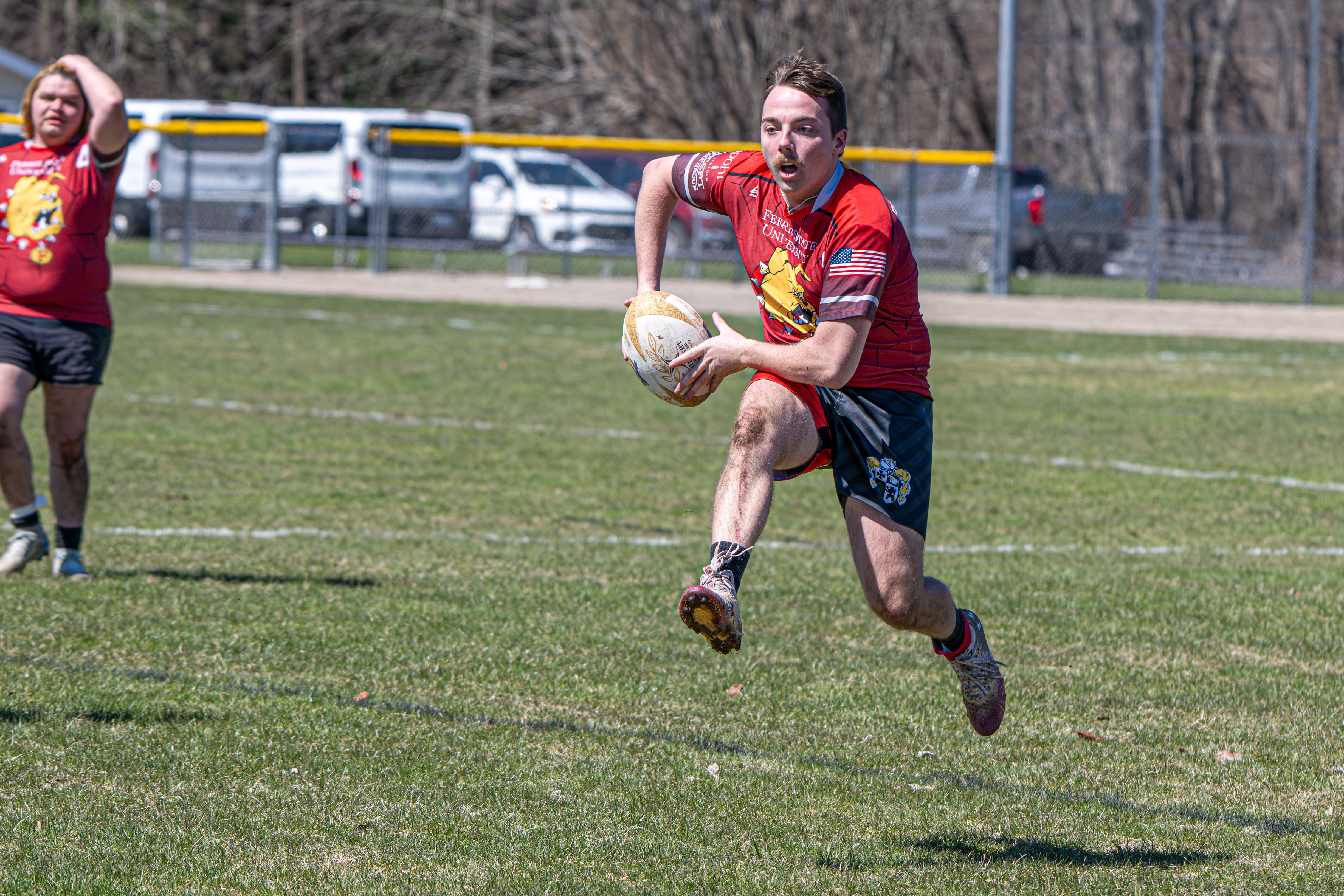
Carry. Support. Compete.
Every player has a role.
New to the game?
Rugby may look complicated at first, but the basic idea is simple: carry, pass, or kick the ball into the opponent’s territory and score more points than the other team.

Players may run forward with the ball, but passes must travel sideways or backward. A forward pass results in a scrum for the opposing team.
The ball may be kicked forward at any time. However, players in front of the kicker are generally offside and cannot participate until they are put back onside.
A player may tackle the opponent carrying the ball. Tackles must be made below the shoulders, and dangerous contact is penalized.
After the tackle
Unlike football, rugby does not stop after every tackle. Teammates arrive to protect the ball, opponents try to win it, and play continues through a ruck.
Rugby players do not switch between separate offensive and defensive units. All players run, pass, tackle, defend, and support their teammates throughout the match.
Players generally must stay behind the ball or behind the last teammate involved in a ruck, maul, or set piece. An offside player cannot interfere with play.
Only the team captain should question or speak extensively with the referee. Respect for officials, opponents, teammates, and the traditions of the game is central to rugby.
5 points
Scored by grounding the ball in the opponent’s in-goal area.
2 points
After a try, the scoring team may kick the ball through the uprights.
3 points
After certain penalties, a team may attempt a kick at goal.
3 points
A player drops the ball during open play and kicks it through the uprights after it bounces.
Speak rugby
The referee allows play to continue after an infringement when stopping the game would disadvantage the non-offending team.
Players who typically use speed, passing, kicking, and open space to attack.
The contest for possession immediately following a tackle.
A kick attempted after a try, worth two points.
A scoring kick taken during open play after the ball touches the ground, worth three points.
An illegal pass that travels toward the opponent’s goal line.
Players who typically compete in scrums, lineouts, rucks, and mauls while also carrying and defending.
The area beyond the try line where the ball must be grounded to score a try.
When a player accidentally knocks or drops the ball forward. This usually results in a scrum for the opposing team.
A restart used after the ball goes into touch. Players form two lines, and the ball is thrown between them.
A group of players bound together while the ball carrier remains standing.
Being positioned illegally in front of the ball or the appropriate offside line and interfering with play.
A sanction awarded after a serious infringement. The non-offending team may kick for territory, take a quick tap, call for a scrum, or attempt a kick at goal.
The rugby playing field.
A contest for the ball after a tackle in which players from both teams remain on their feet and bind over the ball.
A structured restart in which eight forwards from each team bind together and compete for possession.
A temporary suspension, usually lasting 10 minutes, following a yellow card.
A quick restart made by tapping the ball with the foot before passing or running.
The area outside the sidelines. When the ball enters touch, play commonly restarts with a lineout.
Rugby’s primary scoring play, worth five points.
During the match
Watch the ball, look for players supporting the ball carrier, and remember these three things:
You do not need to know every rule before you begin. The best way to understand rugby is to watch it, play it, and learn alongside your teammates.

Your next chapter
You came to Ferris State to become more—to test yourself, build lifelong friendships, and create memories you’ll still be talking about years from now.
That is what Ferris State Rugby offers.
You do not need experience. You do not need to know every rule. You just need the courage to show up, the willingness to work, and the determination to give everything you have.
Rugby will challenge you. It will make you stronger, tougher, more disciplined, and more confident. You will compete beside teammates who push you to improve, pick you up when you fall, and stand with you through every battle.
This is more than a team. It is a brotherhood earned through effort, sacrifice, and respect.
One day, your time at Ferris State will be over. Make sure you leave with more than a diploma. Leave with stories, victories, friendships, and the pride of knowing you stepped onto the field and gave everything for the men beside you.
No experience necessary. No excuses needed.
Step onto the pitch. Find out what you’re made of. Become a Ferris State Rugby Bulldog.